
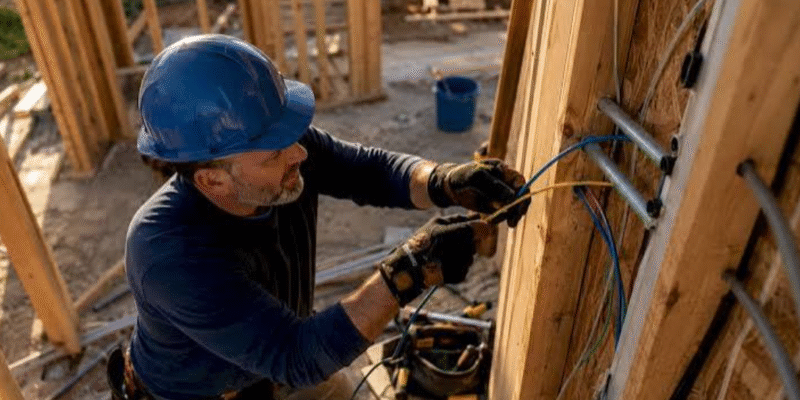
Building a new home or commercial space involves hundreds of decisions. Some feel exciting, like choosing paint colors or flooring. Others feel technical and easy to push aside.
Electrical installation often falls into that second category, but it shouldn’t. The wiring inside your walls will affect your safety, your comfort, and your wallet for decades to come.
What Does Electrical Installation Actually Involve?
New construction electrical work covers far more than running a few wires. It includes planning circuit layouts, installing the main electrical panel, setting up outlets and switches, wiring for lighting fixtures, and connecting major appliances. It also means coordinating with other trades so nothing gets covered up before an inspector can review it.
Every one of these steps needs to follow local code requirements. Codes exist because electrical mistakes can cause fires, shocks, or equipment damage.
A licensed electrician understands these requirements inside and out, which means fewer surprises during inspection and fewer headaches after moving in.
Why Not Just Hire the Cheapest Option?
It’s tempting to save money wherever possible during a build. Construction budgets add up fast. But electrical work is one area where cutting corners tends to backfire.
Underqualified installation can lead to overloaded circuits, improperly grounded systems, or panels that can’t handle the home’s actual power needs. These issues might not show up right away. They might surface months later as flickering lights, tripped breakers, or in worse cases, an electrical fire.
Homeowners who invest in St Louis electrical installations from a licensed, experienced team typically avoid these problems altogether. Getting it right the first time costs less than fixing it later, both in money and in stress.
How Does This Affect Long Term Safety?
Electrical systems don’t announce their problems clearly. A loose connection might work fine for a year before it starts arcing. A panel sized for yesterday’s appliances might struggle once you add central air or an electric vehicle charger.
Professional installers design systems with room to grow. They also test their work thoroughly before signing off, checking connections, verifying grounding, and confirming that everything meets code. This attention to detail is what keeps a home safe for the people living in it, not just on move in day, but for years afterward.
What Role Does Planning Play?
Good electrical work starts long before anyone picks up a wire. It starts with a plan that accounts for how the space will actually be used.
Where will the kitchen appliances go? How many outlets does each bedroom need? Will there be a home office, a workshop, or a future addition?
Skipping this planning stage often leads to awkward fixes down the road, like extension cords running across a room because there aren’t enough outlets, or a panel that’s already maxed out before the homeowner adds anything new.
Experienced electricians ask these questions upfront so the finished home actually functions the way people live in it.
Does Professional Installation Affect Resale Value?
Buyers and their inspectors pay close attention to electrical systems. A home with outdated wiring, an undersized panel, or non-permitted work can raise red flags during a sale. It might even delay closing while issues get resolved.
A home built with proper, code compliant electrical work tends to move through inspections without drama. It also gives buyers confidence that the rest of the construction was handled with the same care. In a competitive market, that kind of confidence matters.
What Should You Look for in an Electrical Contractor?
Not all electrical contractors offer the same level of experience or service. A few things worth checking before hiring one for new construction:
- Proper licensing and insurance for your state and municipality
- Experience specifically with new construction, not just repairs
- Familiarity with local permitting and inspection processes
- Clear communication about timelines and costs
- Willingness to walk through the plan with you before work begins
Taking the time to vet a contractor properly pays off. New construction is not the place to learn that someone cut corners.
Final Thoughts
Electrical work is easy to overlook during a build because so much of it happens behind the walls. But it plays a bigger role in your home’s safety, functionality, and value than almost any other system.
Choosing a qualified team for this part of the project isn’t just another line item. It’s one of the decisions that protects everything else you’re building.










Comments