
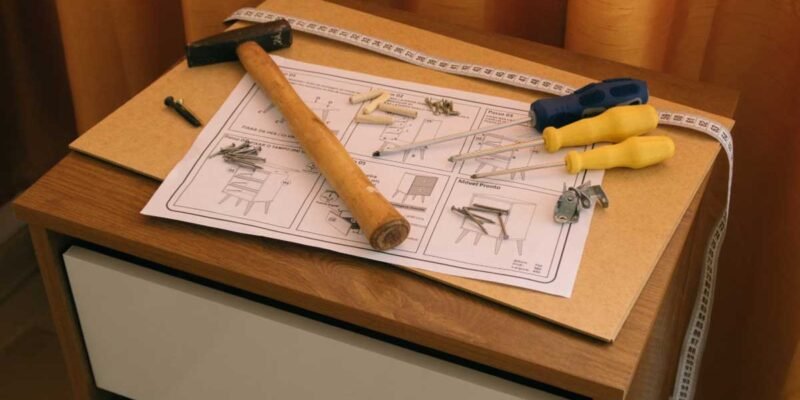
When you look at a towering pergola, a multi-tiered deck, or a heavy timber pavilion, your eyes naturally trace the massive posts and thick overhead beams. Yet, the true integrity of any heavy-duty wooden structure isn’t determined by the timber alone. It relies entirely on the hidden engineering holding those massive elements together against wind, gravity, and constant shifting.
Heavy timber construction leaves zero room for error. When you are spanning long distances or supporting heavy overhead loads, standard hardware simply cannot handle the extreme shear stress. Upgrading to specialized structural lag screws provides the high tensile strength and deep thread engagement necessary to keep load-bearing joints locked rigidly in place for decades.
The Physics of Load-Bearing Joints
Building with thick lumber introduces unique mechanical challenges. Unlike indoor cabinetry where fasteners mostly hold pieces aligned, outdoor framing requires hardware to transfer immense physical weight across intersections. If a connection fails, the entire structural balance can shift, leading to sagging beams, unstable posts, and potential safety hazards.
Quality matters immensely here. Manufacturers like Star Fasteners Plus engineer heavy-duty hardware specifically to resist pulling forces and bending moments under load. When timber expands and contracts through seasonal moisture and temperature swings, these robust fasteners maintain their grip without snapping or loosening over time.
Environmental Stress and Timber Behavior Outdoors
Outdoor structures face a relentless cycle of environmental extremes. Scorching summer sun bakes timber, while autumn rains and winter freezes force wood fibers to swell and contract repeatedly. This constant dimensional change puts immense lateral and shear pressure on your fastening points.
Standard steel hardware can quickly fatigue or snap under this ongoing stress. Furthermore, chemical treatments used in modern outdoor lumber can react with inferior metals, causing rapid corrosion. Using engineered, corrosion-resistant fasteners ensures that your framing maintains its clamping force despite fluctuating weather patterns.
Smart Strategies for Framing Stability
Achieving a rock-solid timber frame requires more than just driving in heavy hardware. Proper technique ensures your materials perform at their absolute best:
- Calculate your load paths: Understand where the weight originates and how it travels down to the ground, ensuring every major connection point is adequately reinforced.
- Avoid pre-drilling mistakes: Heavy-duty timber connections require accurately sized pilot holes to prevent wood splitting while allowing the full shank and threads to bite securely.
- Prioritize corrosion resistance: Outdoor structures are constantly exposed to moisture, making specialized exterior coatings essential to prevent rust from degrading the metal over time.
- Space your fasteners correctly: Avoid crowding too many screws into a single grain line, which can weaken the timber block rather than strengthening it.
Following these practices protects your investment and prevents structural fatigue before it starts.
Long-Term Maintenance and Structural Assurance
Even the most robust outdoor builds benefit from periodic inspections. Checking your structural connections once a year—especially after severe seasonal storms—allows you to catch minor shifts early. Ensuring that bolt heads remain tight and flashing is intact preserves the lifespan of both your lumber and your hardware, keeping your outdoor living space safe and secure for generations.
Building for the Long Haul
At the end of a demanding build, true peace of mind comes from knowing your framing can handle whatever nature throws its way. By treating heavy hardware as the literal anchor of your project, you ensure your handiwork remains safe, stable, and striking for years to come. With reliable components from Star Fasteners Plus backing up your craftsmanship, every joint you assemble will stand strong against the test of time.



Comments